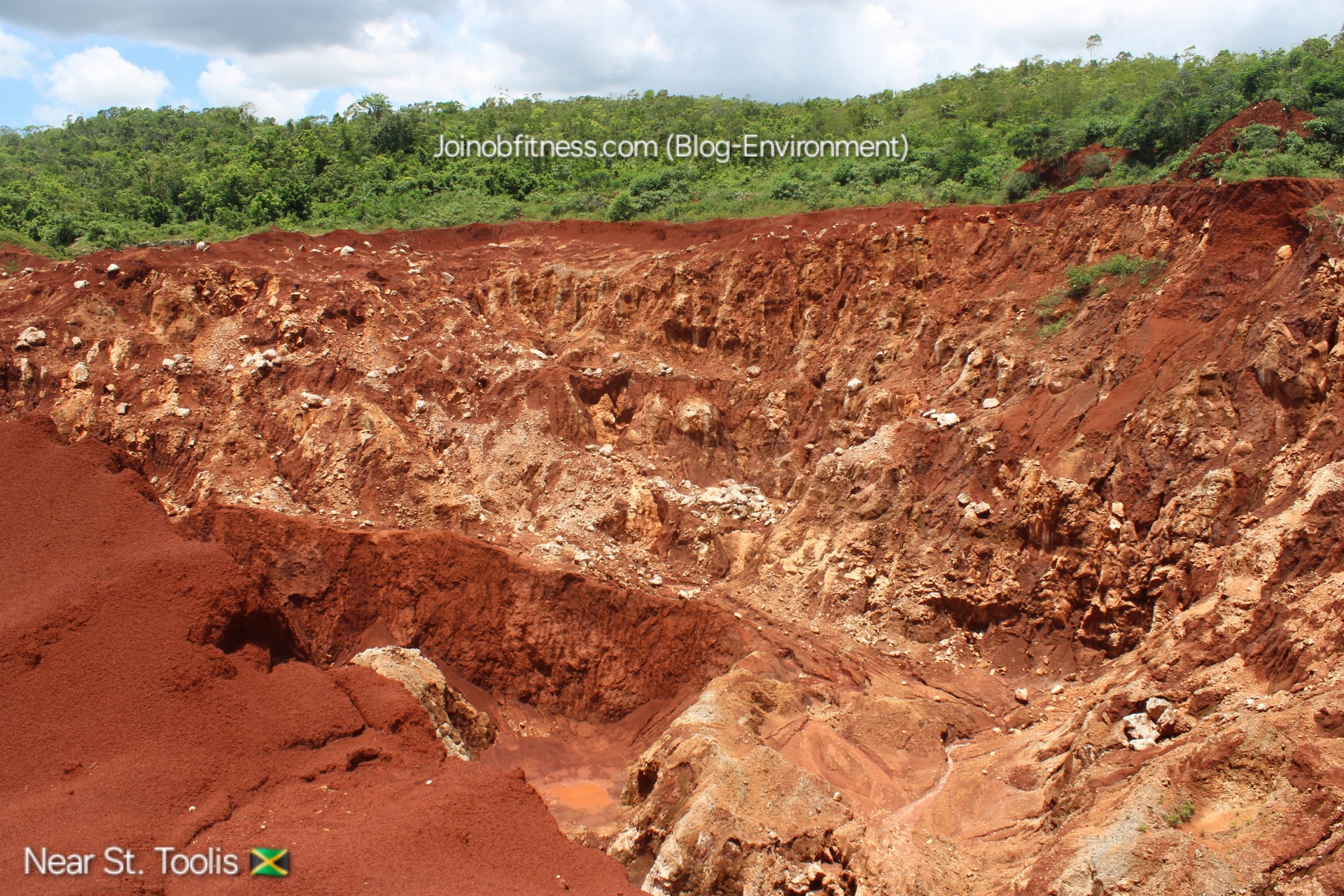
Not much is expressed by nutrition, dietary & geology professionals in Jamaica & The Caribbean, of the connection between Geology & Nutrition-particularly on minerals which function as micronutrients in human, animal & plant health. Similarly there is the lacking of courses (tertiary) at institutions within the locales mentioned, that educate budding professionals (health, medical, geology) on this connection.
The lack of this in our view negatively impact the health, wellness, and agriculture objectives of Government, their relevant agencies & workers, and those in the private sector alike, in today’s society; and in so doing further act as a drawback, towards the objectives being realized.
In this blog post, we shed some light on this in the form of an overview. Interested in accessing our support towards helping you lead a healthier lifestyle through exercise and/or diet? Order our personal training system, and/or email us at obfitness4u@gmail.com
What is a Mineral?
Definition 1: “A mineral is a naturally occurring inorganic element or compound having an orderly internal structure and characteristic chemical composition, crystal form, and physical properties. Common minerals include quartz, feldspar, mica, amphibole, olivine, and calcite.”
What Is The Difference Between A Rock & Mineral| U.S Geological Survey| Retrieved March 14, 2023Definition 2: “Minerals are those elements on the earth and in foods that our bodies need to develop and function normally. Those essential for health include calcium, phosphorus, potassium, sodium, chloride, magnesium, iron, zinc, iodine, chromium, copper, fluoride, molybdenum, manganese, and selenium.”
Definition of Health Terms| Minerals: Medline Plus| Retrieved March 14, 2023
The Geo-Bio Connection of Essential Minerals for Health (Humans, Plants, Animals)
The earth is the source of all minerals available and necessary for human, plant & animal life. The origin of all essential minerals for health-calcium, phosphorous, potassium, sodium, chloride, magnesium, iron, zinc, iodine, chromium, copper, fluoride, molybdenum, manganese, & selenium-is rooted in geology (the bedrock & their mineral composition). The combined ‘working’ on the geology of the minerals through bioagents (unicellular & multicellular), and non-bio environmental agents (rainfall, groundwater, temperature, pressure), contribute towards the breakdown & bioavailability of these minerals for human, plant & animal (multicellular) health.
This bioavailability (ease of absorption) of minerals is highlighted through agriculture as well as health & wellness industries. The food (plants, plant-based, animals, animal-based) we eat, and the ergogenic aids we consume, ‘hold’ the minerals as well as the other nutrients, we need for life. Ecology reference plants (land) as the predominant primary level for multicellular animals (humans included) to acquire bioavailable minerals for life. In water bodies, both unicellular organisms & plants (algae) are the predominant primary level. Aquatic Food Webs| National Oceanic and Atmospheric Administration| Retrieved March 14, 2023Example of Aquatic Bioavailable Mineral Sources
Interested in accessing our support towards helping you lead a healthier lifestyle through exercise and/or diet? Order our personal training system, and/or email us at obfitness4u@gmail.com
Geology Source of Minerals Essential for Your Health
Calcium
Predominantly in the carbonates-CaC03 (limestone, marble, chalk). Limestone rocks dominate the geology of Jamaica.
Iron
Exists in rocks containing Hematite & Magnetite.
Phosphorous
Exist as Apatite, Phosphate rock & Phosphorite.
Magnesium
Exist as Magnesite, Dolomite & Carnallite.
Potassium
Exist as Potassium Feldspar (found in rocks of igneous origin).
Zinc
“Zinc ore is most commonly found as zinc carbonate (ZnCO3), known as calamine or smithsonite.” Zinc Ore & Mines| Minerals & Mines| British Geological Survey| Retrieved March 14, 2023Iodine
“In igneous rocks its concentration is fairly uniform and averages 0.24 mg/kg. Sedimentary rocks tend to have higher concentrations with average iodine contents of:-recent sediments 5-200 mg/kg, carbonates 2.7 mg/kg, shales 2.3 mg/kg and sandstones 0.8 mg/kg.” The Geochemistry of Iodine-A Review| PubMed| Retrieved March 14. 2023Molybdenum
Molybdenite is the form. Molybdenite occur in rocks of magma origin.
Manganese
“The dominant processes in forming the world’s principal deposits take place in the oceans. As a result, most important manganese deposits occur in ancient marine sedimentary rocks that are now exposed on continents as a result of subsequent tectonic uplift and erosion.”Manganese| U.S Geological Survey| Retrieved March 14, 2023Selenium
“In Earth’s crust, selenium is found as selenide minerals, selenate and selenite salts.” Selenium| U.S Geological Society| Retrieved March 14, 2023Copper
Copper is found in rocks of magma, and sediment origin.
Chromium
Occur as Chromite mainly. And this has origin in magma-derived rock
Sodium & Chloride
Occur as Halite. Halite is the source of sea salt & table salt.
Fluoride
Occur as Fluorite. Can be found in rocks of magma & sedimentary origin.
About The Author
Oshane Bryant: BSc Geology, Geography Minor; ACE CPT since 2012; Jamaica Business Development Corporation (JBDC) Accelerator Graduate-2018 cohort; Licensed KUKIBO Martial Arts & Self Defense, Senior Instructor; OB Fitness Founder & Managing Director.



 Oshane Bryant: BSc Geology, Geography Minor; ACE CPT since 2012; Jamaica Business Development Corporation (JBDC) Accelerator Graduate-2018 cohort; Licensed KUKIBO Martial Arts & Self Defense, Senior Instructor; OB Fitness Founder & Managing Director.