All of these groups through observation & statistical revelation (violent crime, armed conflict) across countries world-over, reflect this. In the days when the firearm wasn’t as widespread as it is today (centuries ago), the firearm would have been accessible predominantly by trained groups-such as militaries-who would use their weapon(s) to repel attack from foreign threats towards their state. Today, with the relative ease of firearm access & distribution among the citizen population-by both legitimate & illegitimate suppliers-the firearm not only dominate as the primary weapon of choice: in conflicts between states; but internal conflicts as well (between citizen & citizen; between citizen & state forces).
Why The Firearm Dominate As The Primary Weapon of Choice for Combat, Today
As a primarily distant weapon, with a greater lethality range relative to the sword, the firearm grant the holder-with just the squeeze of a trigger-the power to end or repel attacks from multiple threats (humans & animals). Similarly, without having to invest years of training in the martial arts (such as mental conditioning, body hardening, melee weaponry skills development, etc.,) the firearm holder (untrained even) becomes an equal (at the least) with a trained/conditioned, unarmed combatant.
Based on this reasoning alone, one can see why the martial arts (through training, culture, etc.,) isn’t as highly regarded in self-defense situations & close quarter battles of today, across multiple segments of a population-especially in western societies, such as Jamaica & The United States of America.
But when you think on this objectively, should this stance be taken? To regard the martial arts & martial arts training, as irrelevant, ineffective and/or a waste of time for self-defense & combat situations involving foe(s) with the firearm, today?
To objectively address this question, we share some insight into firearms training as shared by professional armed forces in the public domain, and compare with our input and experience in the martial arts.
As a primarily distant weapon, with a greater lethality range relative to the sword, the firearm holder with just the squeeze of a trigger, can end or repel attacks (humans & animals). And without having to invest years of training in the martial arts (such as mental conditioning, body hardening, melee weaponry) the firearm holder becomes an equal (at the least) with a trained, unarmed combatant.
General Firearms Training As Adopted By Professional Armed Forces
For civilians who train to become soldiers/officers, their journey of training to become competent with their service weapon(s) (firearm), can be summarized into the following:
Immersion Into The Culture
Through the building of discipline. Embodiment of the values (code). Functional capacity building (physical fitness, pain threshold conditioning, mental conditioning); among others.
Combat Skills Development
Through marksmanship and weapon anatomy & mechanics. Through hand-to-hand (unarmed) training; and learning how to prioritize & engage multiple targets.
Mission Planning & Preparation Capacity Building
Through leadership course(s) enrollment & team training exercises. Through active duty.
The American Army Basic Combat Training For Enlisted Soldiers And the British Army A Soldier’s Values & Standards support the points above. Both of these armies are regarded as heavyweights in the armed forces world; and both have significant influence on the training & development of armed forces across multiple geographies, such as those here in the Caribbean: (eg., Jamaica’s Defense Force, Military Officers).
These are two links with supporting information for the development of a soldier, you should source.
General Martial Arts Training As Adopted By Martial Arts Schools &
Practitioners
For civilians & professional soldiers alike, who start their journey in the martial arts (formal), prior to receiving their white belt/white sash, they are considered as converts. Their training to be better equipped towards developing themselves as a weapon (mastery level, eg., black belt or black sash and above; or similar) includes the following:
Immersion Into The Culture
Through the building of discipline. Embodiment of the values (code). Functional capacity building (physical fitness, pain threshold conditioning, mental conditioning, spiritual building of self); among others.
Combat Skills Development
Through empty hands training; non-edge weapons training; edge weapons training; etc. And learning how to prioritize & engage multiple targets.
Teaching
To pass on the wisdom learned & developed through years of commitment & dedication to self-improvement, for the betterment of the student(s), future generation(s), and the world in extension.
Enroll in our self defense & martial arts school. Click Image to join.
Summary
The firearm with its greater range of lethality relative to the sword, is the preferred weapon of choice in combat. Because of the advantage it provides through distant engagement, the firearm makes even the untrained holder, an equal, to superior opponent, relative to the trained unarmed combatant. While this may be the case, it’s important to note that firearm access in a combat situation (armed vs unarmed; armed vs armed) doesn’t equate to victory. Strategy, tactics, environment, and fitness, are only some of the other critical factors, that contribute or take away from a combatant(s) advantage, in conflict. This is where continuous training & development (such as through the military or the martial arts) of the personnel, goes a far way in furthering ones advantage.
“Your Sustainable Fitness Partner”
About The Author
Oshane Bryant: BSc Geology, Geography Minor; ACE CPT since 2012; Jamaica Business Development Corporation (JBDC) Accelerator Graduate-2018 cohort; KUKIBO Martial Arts & Self Defense, Senior Instructor; JDF Officer Cadet Recruit, 2012; OB Fitness Founder & Managing Director.


 As a primarily distant weapon, with a greater lethality range relative to the sword, the firearm grant the holder-with just the squeeze of a trigger-the power to end or repel attacks from multiple threats (humans & animals). Similarly, without having to invest years of training in the martial arts (such as mental conditioning, body hardening, melee weaponry skills development, etc.,) the firearm holder (untrained even) becomes an equal (at the least) with a trained/conditioned, unarmed combatant.
Based on this reasoning alone, one can see why the martial arts (through training, culture, etc.,) isn’t as highly regarded in self-defense situations & close quarter battles of today, across multiple segments of a population-especially in western societies, such as Jamaica & The United States of America.
But when you think on this objectively, should this stance be taken?
As a primarily distant weapon, with a greater lethality range relative to the sword, the firearm grant the holder-with just the squeeze of a trigger-the power to end or repel attacks from multiple threats (humans & animals). Similarly, without having to invest years of training in the martial arts (such as mental conditioning, body hardening, melee weaponry skills development, etc.,) the firearm holder (untrained even) becomes an equal (at the least) with a trained/conditioned, unarmed combatant.
Based on this reasoning alone, one can see why the martial arts (through training, culture, etc.,) isn’t as highly regarded in self-defense situations & close quarter battles of today, across multiple segments of a population-especially in western societies, such as Jamaica & The United States of America.
But when you think on this objectively, should this stance be taken?
 For civilians who train to become soldiers/officers, their journey of training to become competent with their service weapon(s) (firearm), can be summarized into the following:
 For civilians & professional soldiers alike, who start their journey in the martial arts (formal), prior to receiving their white belt/white sash, they are considered as converts. Their training to be better equipped towards developing themselves as a weapon (mastery level, eg., black belt or black sash and above; or similar) includes the following:
Immersion Into The Culture
Through the building of discipline. Embodiment of the values (code). Functional capacity building (physical fitness, pain threshold conditioning, mental conditioning, spiritual building of self); among others.
Combat Skills Development
Through empty hands training; non-edge weapons training; edge weapons training; etc. And learning how to prioritize & engage multiple targets.
For civilians & professional soldiers alike, who start their journey in the martial arts (formal), prior to receiving their white belt/white sash, they are considered as converts. Their training to be better equipped towards developing themselves as a weapon (mastery level, eg., black belt or black sash and above; or similar) includes the following:
Immersion Into The Culture
Through the building of discipline. Embodiment of the values (code). Functional capacity building (physical fitness, pain threshold conditioning, mental conditioning, spiritual building of self); among others.
Combat Skills Development
Through empty hands training; non-edge weapons training; edge weapons training; etc. And learning how to prioritize & engage multiple targets.
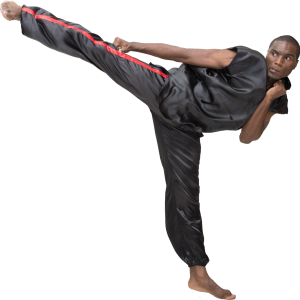
 Oshane Bryant: BSc Geology, Geography Minor; ACE CPT since 2012; Jamaica Business Development Corporation (JBDC) Accelerator Graduate-2018 cohort; KUKIBO Martial Arts & Self Defense, Senior Instructor; JDF Officer Cadet Recruit, 2012; OB Fitness Founder & Managing Director.