Activities of Daily Living: Aging. Dysfunction. Population Challenges. Exercise
Author
admin
Date
July 16, 2022
Share
Filter By Category
Eat More Calories Than You Burn:
What is Activities of Daily Living?
Activities of daily living can be understood as those tasks we do, that are essential to us living a high quality of life; without the external assistance of others. Examples of activities of daily living include:
Feeding ourselves
Personal Hygiene Practices (bathing, dental care)
Walking from point a to point b.
Housecleaning, Cooking
Communication (speech, writing)
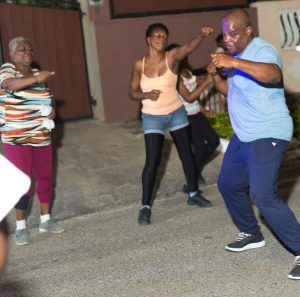
Older Adults Doing Cardio Exercise. Engage in our strength training group workouts. Click Image to see upcoming dates.
Why Understanding Activities of Daily Living is Important
Our functional capability, to do the things that define our independence as individuals within a household; a community; a society; is what shapes the importance in our understanding of the term-activities of daily living. For to be unable to do them, warrants us to be considered dependent members of the population. As highlighted by a Journal article titled Activities of Daily Living: “The term-activities of daily living-was first coined by Sidney Katz in 1950. ADL is used as an indicator of a person’s functional status. The inability to perform ADLs results in the dependence of other individuals and/or mechanical devices. The inability to accomplish essential activities of daily living may lead to unsafe conditions and poor quality of life.” Edemekong, et.al., 2022; Activities of Daily Living; National Library of Medicine
What Is The Correlation Between Aging & Activities of Daily Living?
The process of getting older is aging. On a cellular level, every passing second, cells across the different systems that make up our body, replicate & die. over the process of decades in our lifetime, this continual self-replication based on our genetic code (DNA), will decline in quality; and decline in function. What we see, or experience (large scale expression of aging) include:
Wrinkling of skin.
Slowing down in the healing of our bodies post injury or surgery,
Loss of memory.
Increased rate of cardiorespiratory fatigue.
Increased incidence of central adiposity (bodyfat around waist)
Reduction in muscle mass
Reduction in motor control
Reduced hearing & Seeing capability
With this natural decline in our biologic function with aging, exists the positive correlation between aging and our reduced activities of daily living capacity-post adulthood (productive population segment) years.
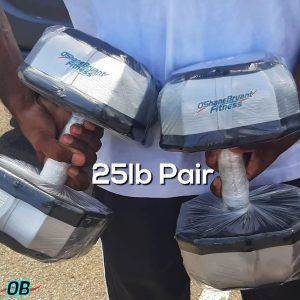
Strength Train With Our Dummbells. Available in Concrete & Metal Versions. 5lb pair-50lb pair. Click image to see prices.
The Role of Exercise In Delaying Aging & Improving/Preserving Activities of Daily Living Capacity
Through research in the exercise sciences over the course of decades, exercise has demonstrated to be a reliable tool, for delaying aging & preserving function. With exercise (cardiorespiratory & resistance) our bodies adapt (acutely & chronically).
Some of the adaptations include:
Increased muscle size (mass).
Increased muscle strength.
Improved balance.
Improved flexibility.
Reduced rate of fatigue.
Reduced resting heart rate.
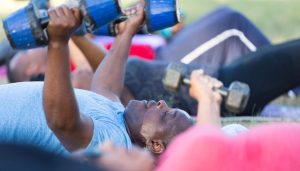
Older Adults Doing Strength Training. Engage in our strength training group workouts. Click Image to see upcoming dates.
It’s through these adaptations (along with others), that exercise can help preserve our capacity to maintain a high rating in our activities of daily living; and improve in other adults (young-older) with a low rating. “Sedentary individuals lose large amounts of muscle mass during the course of adult life (20% – 40%), and this loss plays a major role in the similarly large losses in muscle strength observed in cross-sectional and longitudinal studies. Unlike many other changes that affect exercise capacity, muscle mass usually cannot be maintained into old age even with regular aerobic activities in either general populations or master athletes. Only overloading of muscle with weight-lifting exercise (resistance training) may prevent losses of muscle mass (and also strength) in older individuals . Appropriate progressive resistance training programs of 3 to 6 months or more in duration can be shown to increase muscle strength by an average of 40% to 150%, depending on the subject characteristics and intensity of the program, and to increase total body lean mass by 1 to 3 kg or muscle fiber area by 10% to 30%. Singh 2004, p.203; Exercise & Aging; Clinics in Geriatric Medicine
Demographic Transitions, Activities of Daily Living and Productivity: The Correlation
The population of a defined geographic area (country) undergoes change in it’s numbers over the course of time. Features of this change include a country’s birth rate & death rate. A country with a declining birth rate & death rate (relative to decades prior) reflect an aging population. “The unprecedented increase in population growth during the Post-Malthusian Regime has been ultimately reversed, bringing about significant reductions in fertility rates and population growth in various regions of the world.” Galor, 2014; The Demographic Transition: Causes & Consequences; PubMed Central. Countries with aging populations include Jamaica, Japan, China, England & The United States of America.
An aging population means a declining self-replenishing workforce to take-over in the coming years-decades. This threatens a state economic-productive capacity (sustainably). Which in turn means that financial resources, policies & systems on national & community scales, have to be put in place towards supporting good health in this aging workforce & population segment. All towards the aim(s) of prolonging their productive capacity, and/or lessen the strain on human capital (healthcare sector) needed to care for this aging population-In hospitals, rehab & nursing/geriatric homes. This is where the widespread adoption of high rates of Activities of Daily Living (across the aging productive population segment & other segments), can go a far way in preserving & supporting the productive capacity of nations & communities within these nations, for decades to come.
About The Author
Oshane Bryant: BSc Geology, Geography Minor; ACE CPT since 2012; Jamaica Business Development Corporation (JBDC) Accelerator Graduate-2018 cohort; KUKIBO Martial Arts & Self Defense, Senior Instructor; OB Fitness Founder & Managing Director.


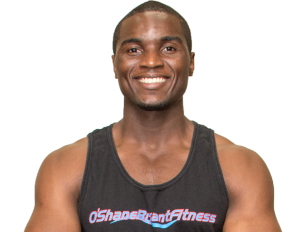 Oshane Bryant: BSc Geology, Geography Minor; ACE CPT since 2012; Jamaica Business Development Corporation (JBDC) Accelerator Graduate-2018 cohort; KUKIBO Martial Arts & Self Defense, Senior Instructor; OB Fitness Founder & Managing Director.